I was just listening to this song a bunch earlier today and
I’m struck by two things that make this one of the best tracks on Raekwon’s
nearly perfect Only Built 4 Cuban Lunx.
First, it took some serious audacity for RZA to flip the same sample twice on
the same album, but he did just that with the rugged strings that drive “Guillotine
(Swordz)” and underpin this song. Second, Masta Killa was unstoppable from his first
verse on “Da Mystery of Chessboxin’” through everything he did on Wu-Tang Forever, and this song is no
exception. He was unstoppable enough that he could show up between Raekwon and
Ghostface in their primes on a song and still be the illest by a wide margin. Inspectah
Deck and U-God were similarly astounding during this five year period, and it’s
a shame that all three didn’t get RZA-produced solo albums during the five-year
plan. A Masta Killa album in 1996 would have undoubtedly been a classic since
RZA didn’t make a bad beat during this era and Masta Killa was capable of
verses like this. It probably would’ve even surpassed No Said Date.
A blog about hip-hop, jazz, punk, psychedelic rock, funk, and whatever other kinds of music I get inspired to write about. There are too many good sounds out there for me to get to them all, but I'm doing my best.
Sunday, April 7, 2013
Friday, April 5, 2013
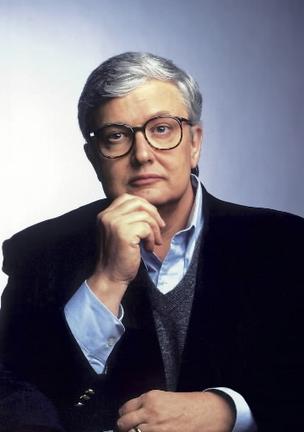
R.I.P. Roger Ebert
Roger Ebert died yesterday. Across the internet, critics and writers have eulogized him and recalled their experiences with him. Most critics felt his influence even if they never met him personally. Some of my favorite critics including Nathan Rabin, Stephen Hyden, Jim DeRogatis, and Wesley Morris have made excellent contributions to the conversation. For them, his nationally syndicated reviews, his weekly television show At the Movies with colleague/rival Gene Siskel, or interactions with him at film festivals, at the Lake Street screening room in Chicago, or at the Chicago Sun-Times offices were formative experiences for them as burgeoning critics.
I can’t say that I share those experiences. I’ve never been
to the Lake Street screening room. I grew up in a Chicago Tribune household so I never read his reviews growing up. I
have some vague memories of At the Movies
from when I was a kid, but it wasn’t something I consciously watched. Honestly,
I can probably trace most of my initial awareness of Ebert to his appearance on
an episode of The Critic that my
friend Jeff had taped. Until he was featured in an incredible Esquire profile in 2010 that detailed the
loss of his ability to eat and speak due to a battle with cancer, I didn’t
think about him much growing up, although I was very aware of his importance
and his stature as both a critic and a local icon. His presence loomed over
Chicago in a way that few of the city’s residents have.
During the 1970s, my uncle Tom Fitzpatrick wrote for the Chicago Sun-Times, and he developed
alongside Ebert at the paper. They were friends and colleagues, and they
influenced each other as they established their respective voices as writers.
Both won Pulitzer Prizes for their work at the paper. By the time I was born,
Tom had moved to Phoenix, but I saw him a few times growing up, and I was in
awe of his life. He was a great writer and an effortlessly interesting and
assured person. When I was in late elementary school, my family visited him and
my aunt in Phoenix, and he took me on a tour of the offices at the Arizona Republic. I was over a decade
away from realizing that I wanted to be a writer, but that day is still one of
my favorite memories from a child. Even though I had no inkling of my future,
it was a formative experience for me nonetheless.
When Tom passed away during the summer of 2002, I had just
turned 14 and was about to start high school. His memorial service was held at
the Tribune Building in Chicago (he also wrote for the Chicago Tribune for a few years), and Ebert was one of the many
speakers who showed up to laud my uncle’s life and work. I don’t really
remember anything he said when he was up at the microphone, but I remember him
being warm and funny and grateful for the experiences he had with Tom in his
earliest days as a film critic. Even after decades of establishing himself as
the greatest film critic in history, he hadn’t lost the joy that he got from
movies or from the people he worked with and counted among his friends. I was
extremely shy at the time, but he was so inviting that I managed to build up
the courage to go talk to him. Rush Hour
2 had just come out on VHS and I had been watching it at home frequently,
and even though I was an awkward, inarticulate, and vaguely surly kid he seemed
happy to take a few minutes to listen to my opinion of the film and share his
own (he was not a fan of either the movie or Chris Tucker, although he had a
lot of nice things to say about Jackie Chan; I liked everything about it, and
even though I know now that it isn’t a great movie I still find it immensely
entertaining and it’s one of the few VHS tapes sitting on my shelf next to all
of my DVDs).
I barely qualify as a critic, and I’m not that good of a
writer yet. The one thing I have going for me is a passion for music and
culture that has sustained me through my frustration with my too slowly-developing
abilities and my difficulty finding paid writing jobs. A small but important
part of that came from my chance to talk to a man who cared so deeply for
movies and for the people who watched them that he would listen to me as if I
was a peer rather than just some kid. Without the respect this titan of a
writer and critic afforded me and my ideas even when they differed from his own
it is unlikely that I ever would have built up the confidence to begin
committing my own opinions on the art that most moves me to paper and putting
them out into the ether.
Roger will be missed.
Sunday, March 31, 2013
Shady Blaze - "Rest in Peace R.J."
I had to get a late pass when it comes to Shady Blaze. I’m
not at all familiar with his solo material, although I just recently started
listening to his very good collaborative album with Deniro Farrar (whose music
I was also a latecomer to). I really have no idea what his subject matter is
usually like, or how polished his music generally is.[1]
A week ago, Shady Blaze released a loose track called “Rest
in Peace R.J.” R.J. is Blaze’s son, who was born three months premature, hung
on for twenty days, and then passed away. Blaze recorded “Rest in Peace R.J.”
three days after his son’s death. There is a great tradition of painful story
songs in rap history, from R.A. the Rugged Man’s embodiment of his father’s
Vietnam experience in “Uncommon Valor” to Big L’s story of growing up in poverty
in “How Will I Make It” to Ghostface Killah’s recollection of a friend dying in
his arms in “Impossible,” but this song is the most painful one I have ever
heard. The detail is excruciating, the verses rough, sounding almost
unfinished, the emotion so fresh that it’s difficult to listen to. But the song’s
urgency is its most striking quality. It sounds as if he couldn’t do anything
other than rap after losing his son. His art is the only thing that could sustain him in the days after his experience.
As he says at the beginning of the song, “this is like the only way I know how
to release, you know, my feelings. I don’t know what else to do anymore.”
I can’t begin to understand what Shady Blaze’s life must be
like now, but my condolences go out to him and his family.
Saturday, March 30, 2013
RZA and Ghostface Suggest a Few Reasons to Die
The RZA is a musical visionary and his knowledge of kung fu
flicks is damn near unparalleled in both the world of hip-hop and among the
general public.[1]
When the RZA speaks on any topic—but especially when he talks about kung fu or
music—he speaks with a wisdom that parallels the abbots in the Shaw Brothers
movies he holds in such high regard. Unfortunately, his directorial debut The Man with the Iron Fists was a boring
mess of a kung fu movie, too Technicolor bright and half-baked to even be
worthy of the temple of Shaolin greats.[2]
RZA’s artistic vision proved to be an unfortunately poor fit for cinema, even
as his best music has a palpable cinematic feel to it.
Now that he’s gotten his movie out of his system, the RZA
has stepped back behind the scenes of the most exciting new Wu-Tang record
since Only Built 4 Cuban Linx… Pt. II
came out four years ago: Ghostface Killah & Adrian Younge’s Twelve Reasons to Die. The three songs
from the album that have leaked (“The Rise of the Ghostface Killah,” “The Sure
Shot (Parts 1 and 2),” and “Enemies All Around Me,” the last of which features
William Hart of the Delfonics) have all been astounding slices of
Morricone-indebted cinematic goon rap. This is due primarily to Younge’s live
band instrumentals that reach the potential that was hinted at in Wu-Tang Chamber Music (which featured
the Revelations as the backing band). RZA is listed as executive producer on
the album—the first Ghostface record overseen by RZA since the genius Supreme Clientele in 2000—and his and
Younge’s vision have reenergized Ghost. The featured artists are all from the
lesser-known end of the Wu-Tang camp—Masta Killa, U-God, Inspectah Deck,
Cappadonna, and a recently released from prison Killa Sin, all of whom benefit
greatly from some artistic guidance or executive production.
The trailer for the Twelve
Reasons to Die album and 49-date tour
(presumably directed by Younge, who has handled the majority of the videos from
his previous projects) is more effective in one minute than RZA was with a full
hour and a half.
Soul Temple Records will release Twelve Reasons to Die on April 16. A review of the album and of the
April 26 show at Chicago’s Abbey Pub will be coming in the next month.
Also as a bonus, here’s the trailer for the six issue comic
book miniseries that is accompanying the album’s release. The always great Jim Mahfood and Ben Templesmith are among the exciting roster of artists involved with this project.
[1] For
evidence of this, check out the DVD commentary for The 36th Chamber of Shaolin, where RZA wipes the floor
with the other commentator, noted film critic Andy Klein. There is absolutely
no reason RZA or anyone else should know who choreographed seemingly every
fight in every kung fu movie ever released, but RZA gives the impression that
he does.
[2]
Full disclosure: when I saw The Man with
the Iron Fists in theaters, I was so bored that I fell asleep for a bit,
and I’m not sure how much of the movie I missed. Even with this sleep break,
the movie still felt much longer than its 96 minute runtime.
Subscribe to:
Posts (Atom)